

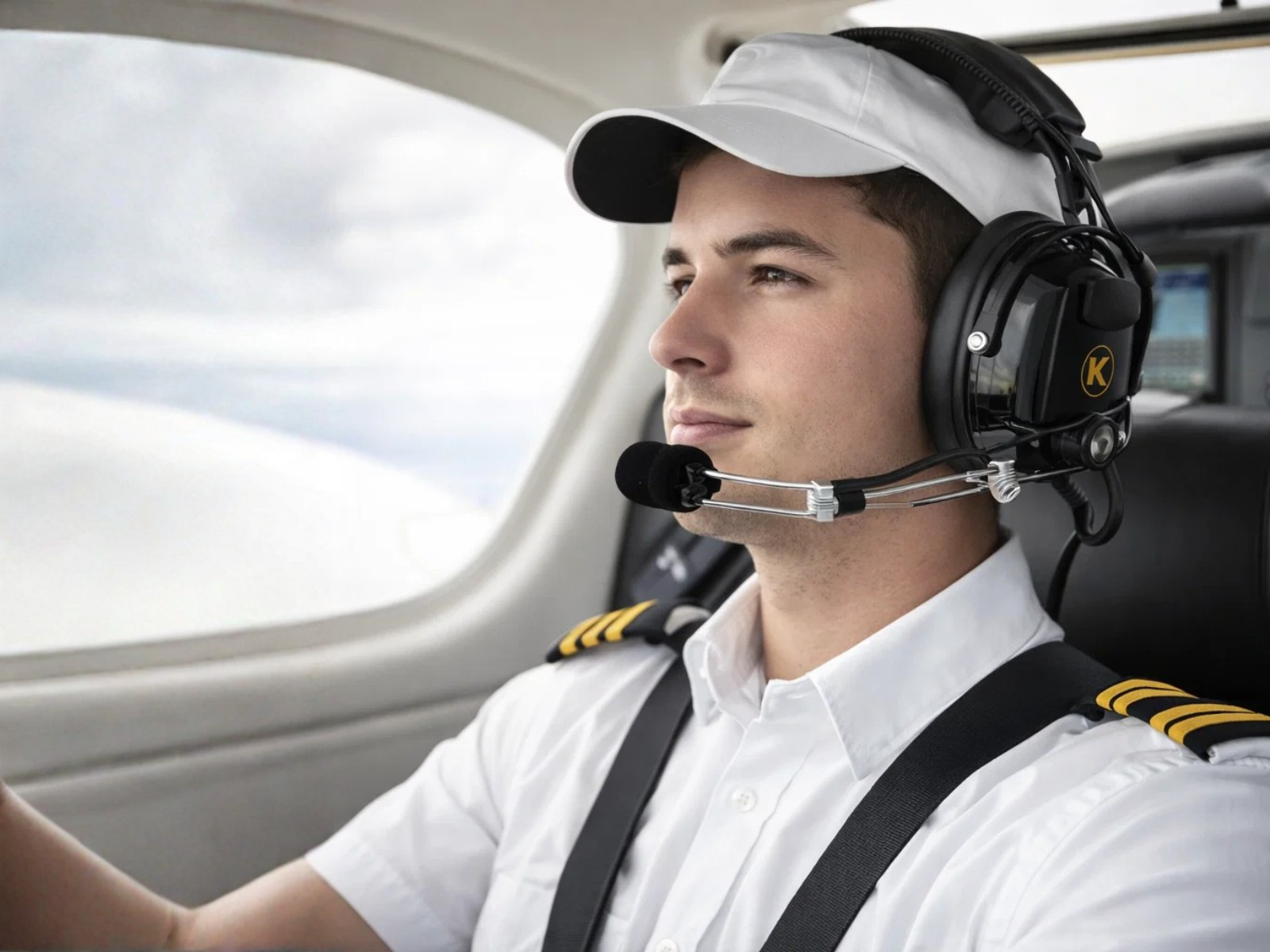
KORE Aviation - The best aviation headset for student pilots in 2026 depends on how you're training and what you value. For most students, the value tier offers the best balance of performance, comfort, and price. You don't need to spend $1,000 on a headset to get through your PPL, but you also shouldn't grab the cheapest thing on the shelf. Understanding the three tiers of aviation headsets will help you make a smart decision before your first training flight.
The Three Tiers of Aviation Headsets
Aviation headsets fall into three distinct price and performance tiers. Here's a side-by-side look at what each tier offers:
| Rental / Budget Tier | Value Tier | Premium Tier | |
|---|---|---|---|
| Price Range | $100 – $150 | $200 – $250 | $400 – $1,100+ |
| Representative Headset | Rugged Air RA200 | KORE Aviation KA-1 | David Clark H10-13.4, Bose A30, Lightspeed Zulu 3 |
| Noise Reduction | Passive (PNR) | Passive (PNR) : 24 dB NRR | Active (ANR) |
| Ear Seals | Foam | Silicone gel (standard) | Gel or memory foam |
| Build Quality | Plastic construction | Steel-reinforced headband | Premium materials throughout |
| Warranty | 1 year | 5 years | ~5 years |
| AUX / Music Input | Rarely | Yes | Yes |
| Carrying Case | No | Included | Included |
| Best For | Fleet loaners, discovery flights | Student pilots in training | Career pilots, high-hour flyers |
Most student pilots look at the budget tier and the premium tier and assume there's nothing in between. There is and it's where the smartest buying decision lives.
Also read:
Why the Value Tier Is the Smartest Buy for Most Student Pilots
For most student pilots, the best headset is usually not the cheapest one and not the most expensive one. It is the one that gives you solid comfort, clear audio, and dependable build quality without taking too much money away from flight hours.
That is why the value tier makes so much sense.
Budget headsets can work for a while, especially for a discovery flight or very light use, but regular training tends to expose their weak points. What seems fine at first can start to feel uncomfortable once you are flying more often. Noise reduction may feel limited, the fit may get annoying during longer lessons, and lighter construction may not hold up as well over time.
At the other end, premium ANR headsets are good, but they are often more than a student pilot really needs in the early stages of training. They make more sense once flying becomes a bigger part of your routine, especially for longer trips or frequent use. During primary training, though, many students are better off putting that extra money into more time in the airplane.
That leaves the middle ground, which is where a lot of smart buying decisions happen.
A strong value tier headset usually gives student pilots the things that matter most:
- enough passive noise reduction for a typical training aircraft
- better comfort during one to two hour lessons
- sturdier materials for regular use
- a price that still feels reasonable during training
A headset like the KORE Aviation KA-1 fits well in that category. It focuses on the features student pilots are most likely to notice most during regular training, including 24 dB passive noise reduction, silicone gel ear seals, mono and stereo support, independent volume controls, aux input, a headset bag, and a 5 year warranty.

What makes that useful is not just the feature list itself. It is how those details show up during training. Better ear seals can make longer lessons easier on your head. Clearer audio helps with radio work. A stronger warranty matters when the same headset is getting packed and unpacked several times a week.
For many students, that is the real appeal of the value tier. It feels like a noticeable step up from the entry level options, but it still leaves room in the budget for the thing that matters most at this stage, which is more flying.
What to Look For in a Student Pilot Headset
Regardless of which tier you choose, here are the four things that matter most for a student pilot headset:
1. Noise Reduction
Training aircraft are loud. You need a headset that reduces cockpit noise enough that you can clearly hear your instructor and ATC. Passive noise reduction (PNR) in the 22–26 dB range is more than adequate for training environments. Active noise reduction (ANR) goes further, but passive is effective and doesn't require batteries.
2. Comfort
You'll wear this headset for 1.5–2 hours per lesson, sometimes back-to-back. Gel ear seals make a significant difference compared to foam — they conform to your head shape, distribute pressure better, and create a better acoustic seal. If a headset is uncomfortable, it becomes a distraction in the cockpit, which is the last thing you need during training.
3. Warranty and Durability
Student pilots are hard on gear. Your headset will get thrown in bags, crammed in lockers, and used several times a week. Look for at least a 3-year warranty. Metal-reinforced construction holds up much better than all-plastic builds over time.
4. Compatibility
Most training aircraft use standard dual-plug (GA) connectors. Make sure your headset supports this, nearly all fixed-wing headsets do. If you think you might also train in helicopters, look at headsets with interchangeable plugs or check out helicopter-specific options like the KORE Aviation H1. If you want a lighter or more streamlined option for general aviation, the KORE Aviation P1 is also worth a look.
Do You Need Active Noise Reduction (ANR)?
For most student pilots, probably not right away.
ANR headsets are built to reduce low frequency engine noise, which can make the cockpit feel quieter. Some pilots like that, especially if they fly often or spend long stretches in louder aircraft. But during primary training, that usually falls into the category of a nice extra rather than something you truly need.
Here are the main reasons many students choose not to start with ANR:
-
Most training flights are short
A lot of student lessons are around one to two hours. In that kind of flying, a good passive headset is usually enough. -
A strong passive headset already does the job
For common trainers, many students find that a quality passive headset gives them the comfort and radio clarity they need. -
ANR costs a lot more
The jump in price can be significant. For a student pilot, that money often goes further when used for lessons, ground school, or checkride prep. -
It adds one more thing to manage
Some ANR models depend on batteries or charging. That is not a huge problem, but it is still one more thing to think about during a stage of training where your attention is already stretched. -
Your flying plans may change
Early on, many students are still figuring out what kind of pilot they want to become. It often makes sense to wait before spending premium money on gear.
That does not mean ANR is the wrong choice. Some students prefer it and have the budget for it. But for most people working through primary training, a good passive headset is usually the more practical place to start.
What Student Pilots Usually Regret After Buying the Wrong Headset
A lot of headset regret comes down to buying too quickly or focusing on the wrong thing.
1. Buying the cheapest option
A very basic headset may seem fine at first, but once lessons become regular, the weak points show up. Comfort drops off, audio may feel less clear, and the headset may not hold up as well over time.
2. Spending too much too early
Some students go straight to a premium headset before they really know what kind of flying they will be doing. The headset may be excellent, but later they wish they had kept more of that money for lessons, checkride prep, or other training costs.
3. Ignoring fit and comfort
A headset can look perfect on paper and still feel wrong after an hour in the cockpit. That is why comfort matters so much. If a headset creates pressure points or feels distracting, you are going to notice it every time you fly.
4. Not thinking past the first few lessons
The best student headset is usually one that still makes sense after the checkride. A headset that can carry you through training and still be useful afterward is often a better value than one that only feels like a short term solution.
5. Overlooking the warranty
Training is hard on gear. Headsets get moved around constantly, packed into bags, and used several times a week. A better warranty can matter more than many students expect.
How to Choose the Right One in Five Minutes
If you want a simple way to narrow it down, start with the basics.
Look for a headset that gives you:
- passive noise reduction in the low to mid 20 dB range
- gel or gel style ear seals
- a multi year warranty
- standard GA plug compatibility
- a price that still leaves room in your budget for flight time
If a headset checks those boxes, you are probably looking in the right part of the market.
That is why many student pilots end up in the value tier. It usually offers the most practical mix of comfort, durability, and day to day usefulness without pushing the budget too far in either direction.
For students, that is usually the sweet spot. You get a headset that feels like a real upgrade from the most basic options, but you still keep more of your money available for the thing that matters most in training, which is time in the airplane.
Once you look at it that way, the decision becomes a lot easier. The goal is not to buy the most advanced headset on day one. The goal is to buy one that supports your training well, feels comfortable lesson after lesson, and still makes financial sense while you are building hours.
The Bottom Line
Student pilots usually do not need to choose between a bare bones headset and a premium ANR model right away. For most people in training, the smarter move is to buy something that feels comfortable, sounds clear, and holds up well without taking too much money away from flight hours.
That is why the value tier makes so much sense.
A headset like the KORE Aviation KA-1 lands in a practical middle ground. It gives student pilots the features they are likely to notice most during regular training.
Frequently Asked Questions
1. What is the best aviation headset for student pilots?
For most student pilots, a value-tier passive noise reduction (PNR) headset in the $200–$250 range offers the best combination of comfort, noise reduction, and price. The KORE KA-1 ($224.95) is one of the top-rated options in this tier, with gel ear seals, a 5-year warranty, and 24 dB NRR, features typically found on headsets costing $400 or more.
2. Do student pilots need an ANR headset?
Usually not. ANR is excellent, but many students can train very successfully with a solid passive headset and put the savings toward flight time.
3. What is the difference between PNR and ANR headsets?
PNR (passive noise reduction) headsets block noise physically through ear seal padding and cup design. ANR (active noise reduction) headsets add electronic noise cancellation that actively counters low-frequency engine drone. ANR provides a quieter cockpit experience but costs significantly more and requires batteries or charging. Both types effectively protect your hearing during flight.
4. How much should a student pilot spend on a headset?
A student pilot should expect to spend $200–$250 for a quality headset that will last through training and beyond. Headsets under $150 often use foam ear seals and plastic construction that won't hold up to regular training. Headsets above $400 offer premium features like ANR and Bluetooth that are nice to have but not necessary for most students.
5. Are gel ear seals worth it on an aviation headset?
Yes. Gel ear seals are one of the most impactful comfort upgrades on an aviation headset. They conform to your head shape, distribute clamping pressure more evenly, and maintain a better acoustic seal compared to foam. For student pilots wearing a headset several times a week during training, gel seals significantly reduce fatigue and hotspots. The KORE KA-1 includes silicone gel ear seals standard at no extra cost.
6. Can I use my student pilot headset after I get my license?
Absolutely. A well-built value-tier headset like the KORE KA-1 comes with a 5-year warranty and steel-reinforced construction. Many pilots continue using their training headset for years after earning their certificate, for weekend flights, rental aircraft, and as a reliable backup. You can always upgrade to ANR later when your flying hours and mission profile justify the investment.
7. Is passive noise reduction enough for a Cessna 172?
For many students, yes. A well built passive headset in the low to mid 20 dB range works well in common training aircraft like the Cessna 172. The FAA also highlights the importance of hearing protection in noisy cockpit environments, which is why headset quality matters even during early training.
8. Why does hearing protection matter so much in training aircraft?
Because cockpit noise exposure can affect hearing over time, and the FAA specifically recommends hearing protection when ambient noise levels exceed exposure limits.
Final Thoughts
The bigger point is not that every student needs the exact same headset. It is that most students benefit more from buying a solid, comfortable headset and saving the rest of the budget for more time in the airplane. If your flying changes later and you decide you want ANR, you can always upgrade then. Early on, a dependable value tier headset is usually more than enough.


